

Solo Date: Venice
The Biennale, Palazzo Cini, the Prada Foundation and more…

This summer, I am living and working in one of the most beautiful and special cities in the world: Venice, Italy. My love for art has manifested in a two-month long fellowship at the Peggy Guggenheim Collection—a collection of some of the most important art of the 20th century put together by one of the most iconic collectors of all time: Peggy Guggenheim. As a fellow, I share Peggy’s legacy and ensure that the palazzo where she once lived, Palazzo Venier dei Leoni and the works inside, remain clean, safe, and appreciated by the public.


And however iconic the Peggy Guggenheim Collection is, it is only a small needle in the haystack of art-related sites in the ancient city. Venice is home to not only an outstanding variety of churches, palazzos, and architectural masterpieces dating back centuries, but is also famous as a site of contemporary and experimental art through the Venice Biennale. The Biennale, which occurs every two years, brings together art from almost 100 nations—a tradition aging back to 1895, when it was initially established as a celebration of the silver wedding anniversary of King Umberto I and Queen Margherita of Savoy. By the early 1900s, the event grew from a conservative national art show to the leading representation of arts and culture in the world, presenting the most radical and unique approaches to the art of today.
Over the last three days, I had the opportunity to work at the United States Pavilion—a space currently drawing no small amount of controversy for what many see as a lack of political urgency in its presentation of Alma Allen’s Call Me the Breeze, an exhibition of some thirty sculptures by the Mexican-based artist. Jeffrey Uslip’s curatorial strategy centers on Allen’s sculpture as the focal point, the display deliberately spare: white walls, clean light, minimal text, the kind of presentation you might find in a commercial gallery. After three days with the work, however, I began to see it from a different angle. What struck me was the way the light shifted and fell across Allen’s works with each passing hour, changing the space completely. Safe to say, Allen’s bizarre-looking sculptures grew on me—a privilege one only has when spending extended time with a body of work.


So, that’s what I’ve been up to for the past month—and now, I want to bring you along with me to explore the city! With only two days off a week, I’ve made it a ritual to devote at least one to seeking out exhibitions, stumbling upon hidden gems, and following the recommendations of friends I’ve made since my arrival. Although Venice is a small city, there is no shortage of activities to do and things to see (and buy). I began the day with breakfast and coffee and soon headed out to the vaporetto. Since Venice has no cars or roads, the vaporetto is the city’s version of a bus—a boat I take every day to get around.
My first stop was Palazzo Cini, located in Dorsoduro close to the Peggy Guggenheim Collection. I was told to visit the palazzo by a friend who told me about its collection of Renaissance art and artifacts as well as it’s current exhibition, David Salle: Painting in the Present Tense. I started my visit by going up to the second floor to see the collection of the 20th-century Italian collector and philanthropist Vittorio Cini. Walking into the first room felt as if I were stepping back in time. Magnificent Tuscan oil paintings lined the walls and Murano glass chandeliers hung from the ceilings. Italian Renaissance history has never been my main area of study yet my time here has opened up a new awe for the work. I stood for a while admiring the brightness and subtle cracking of the oil paintings.


After spending many minutes with multiple versions of Virgin Mary and infant Jesus, I went upstairs to the David Salle show. Before my visit, I was unfamiliar with Salle’s work but quickly learned that his massive multi-media paintings are meticulously rendered, using Artificial Intelligence to rearrange imagery from the spectrum of art history. From allusions of Picasso-esque faces to still lives to Pop art and of course Italian Renaissance paintings, the work somehow felt connected the art and objects I saw just minutes before on the second floor. In Salle’s compositions, hints of art historical reference blend into each other to create a colorful expression of portraiture and provocation—a survey of how human bodies and the things we deem beautiful have been depicted across centuries.


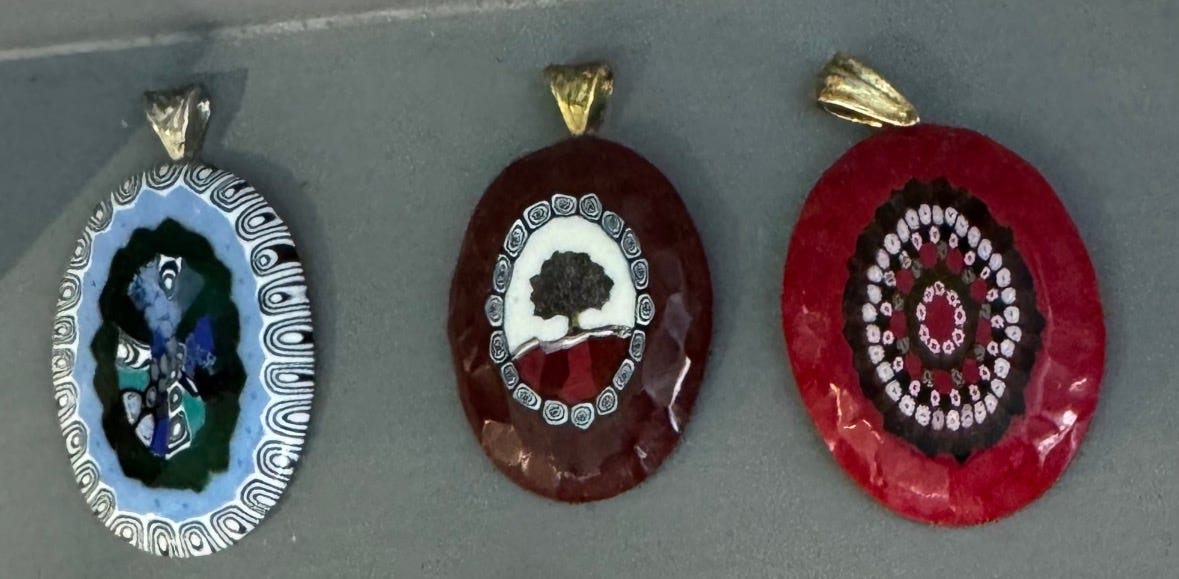
After leaving Palazzo Cini, I made my way over the Accademia Bridge to San Marco to visit my roommate at the Fondazione Bevilacqua La Masa, where he was kind enough to give me a private tour of their exhibition, Picasso, Morandi, Parmiggiani: Still Lives. On the way, I stopped into a Murano glass store and fell in love with these charms (I told the owner I’d be back very soon).
Still Lives brings together two late masters, Giorgio Morandi and Pablo Picasso, alongside the contemporary artist Claudio Parmiggiani, each offering a distinct perspective on the object and demonstrating how the still life evolved through Modernism and continues to develop today. The rooms reflect each artist’s approach—shifting from pure representation in oil paint, to experimentation with form and light, to assemblage, and to the idea of memento mori among a few more. A few objects from Morandi’s studio are on display as well—a detail that was so special.
I loved hearing my roommate talk through the works (I genuinely wish I could have recorded it and linked it here). What stayed with me most was the evolution of the still life as a form over the last century—and of the three, Parmiggiani’s approach was the most arresting. The artist would arrange vases and other traditional still life objects in a room, fill the space with smoke, and let it settle—leaving behind a ghostly silhouette on canvas, the outline of each object rendered in reverse, smoke frozen mid-rise as if time had simply stopped. This exhibition was an amazing work of art in itself, all curated by the president of the Museé national Picasso-Paris, Cécile Debray. And the clever pairing of works I would not have been able to decipher without my roommate and his wonderful explanations so many thanks to you Pablo xx.


After leaving the exhibition, I made the journey from San Marco to Fondazione Prada which is currently exhibiting Helter Skelter: Arthur Jafa and Richard Prince. A friend of mine had been raving about this show so I basically ran over there as it was getting a bit late in the afternoon.
The Fondazione Prada in Venice, also known as Ca’ Corner della Regina has an interesting architectural history. The palazzo was built between 1724 and 1728 atop ruins of the Gothic building in which the queen of Cyprus, Caterina Corner, was born in 1454. Frescos on the first floor illustrate scenes from Caterina’s life, an interesting detail to look out for if you plan to visit. The Prada Foundation took over the property in 2011 and since then has hosted 10 projects dedicated to contemporary art while concurrently restoring the historic palazzo.


Curated by Nancy Spector, Helter Skelter examines America and its subcultures, predominantly those to which society has turned a blind eye and marginalized throughout American history. Arthur Jafa and Richard Prince have taken images from American peripheral culture and reappropriated them to create a vision of contemporary America and the somewhat messy state it has become. References to popular culture and its shadowed truths are foregrounded here and in the 10 or so rooms throughout the show, a retrospective of the two artists’ careers is eminently present. Many works in the multimedia exhibition also point to art history, with the readymade coming into play, unveiling the mirage of an image to reveal the implicit violence beneath its facade. Jafa and Prince are also both known for their work with appropriation. Included in the show is Jafa's The White Album (2018)—a thirty-minute sequence of found YouTube videos that collectively critique white social culture in the U.S.—and probably one of my favorite works in the exhibition.
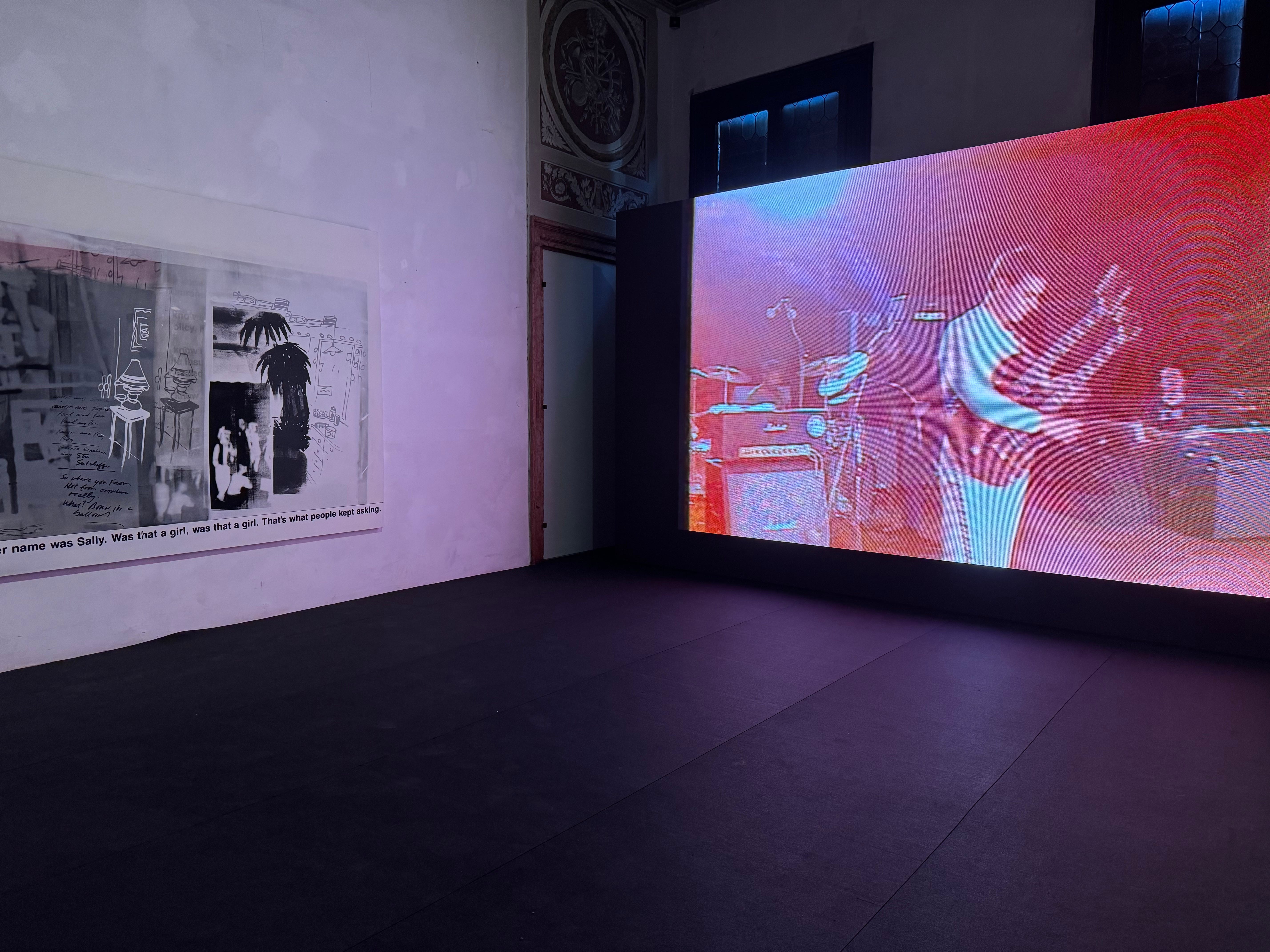
The name ‘Helter Skelter’ also carries serious historical weight—making it a perfect title for an exhibition built around American culture’s deepest tensions and controversies. It started innocuously enough: a British amusement park ride, then a Beatles song on The White Album. But in the late ‘60s, cult leader and m*rderer Charles Manson appropriated the term as his prophecy for an apocalyptic race war between Black and white Americans—and just like that, the name became radioactive. It resurfaced in the ‘90s as the title of a landmark LA exhibition that famously excluded Black artists, adding yet another layer to its legacy. Now ‘Helter Skelter’ gains a new meaning, one that brings darkness and injustice to the forefront rather than sweeping them under the rug.
Helter Skelter is definitely worth a visit. The show is incredibly rich in media and context and the juxtaposition of Jafa and Princes’ work is irrefutably engaging. Spector makes the space feel like you’re in a trance, completely removed from reality—exactly what I needed to escape from Venice’s hot and busy streets.


After leaving Fondazione Prada, I made my way back home passing some beautiful doors pictured above. I got some gelato for my walk and quickly stopped into Palazzo Loredan to see the Sanya Kantarovsky exhibition. The work was not my favorite but I really enjoyed the blend of contemporary painting with the architecture of the Palazzo. I’ll leave a few photos here.


And that's a wrap on my day off. I left the main island feeling thoroughly satisfied and excited for future days off to keep exploring all that Venice has to offer. Meanwhile, if anyone reading is visiting the city and wants to stop by the Peggy Guggenheim Collection, come say hi. Also, feel free to leave a comment with any recommendations or suggestions on which exhibitions I should visit next. Ciao for now and stay tuned for more updates on my next solo-date! Xx Lucy.
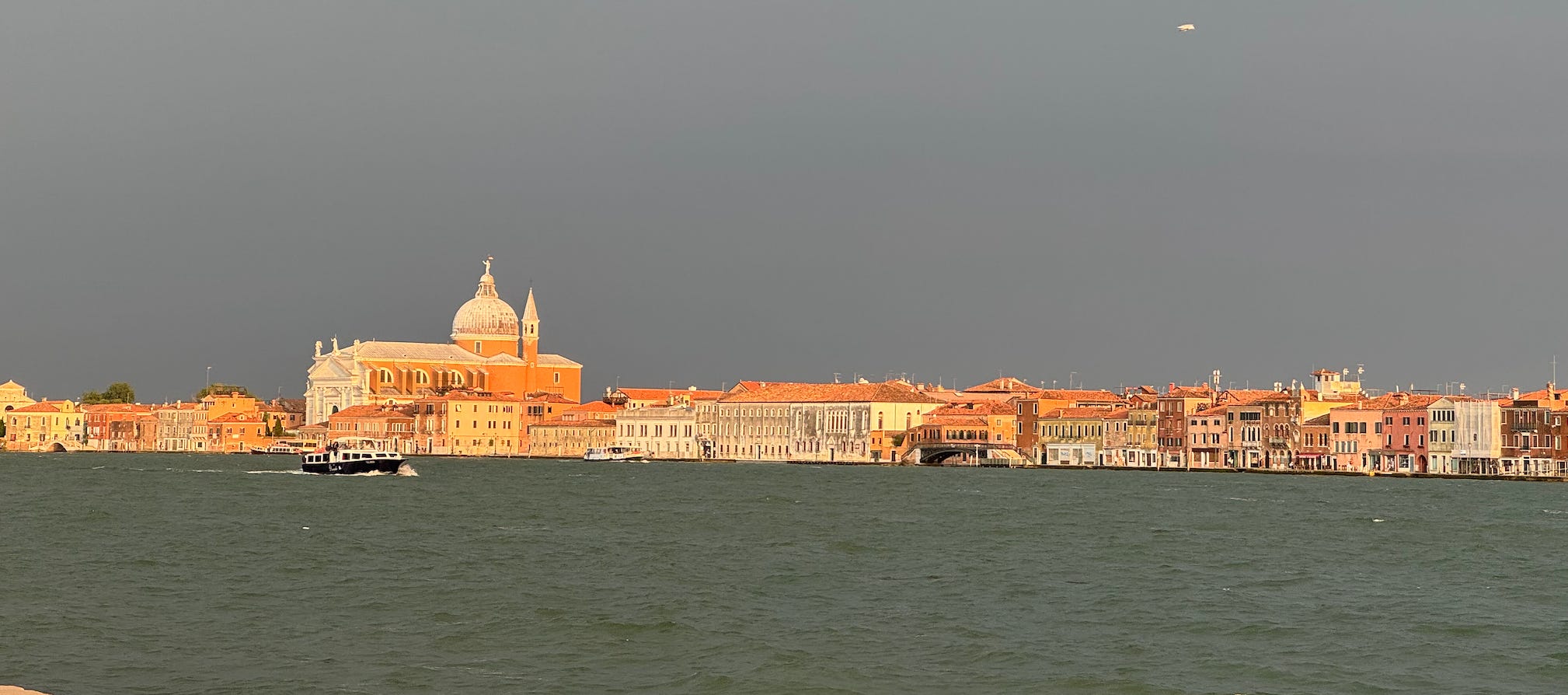
Lucy, huge congratulations. I know Venice from the water — steering and working my way into the city many times, even aboard a five-masted schooner — but this feels like a very different kind of arrival. To step into Peggy Guggenheim’s world for two months is extraordinary. Such an amazing platform. I’m looking forward to following the stories that emerge. Louis
Lucy, this is such a great walk through a very rich art exploration through Venice at the biennale this year! I can’t wait to visit and see it through eyes in real time! Bravo and keep your eyes open to all the wonder!